
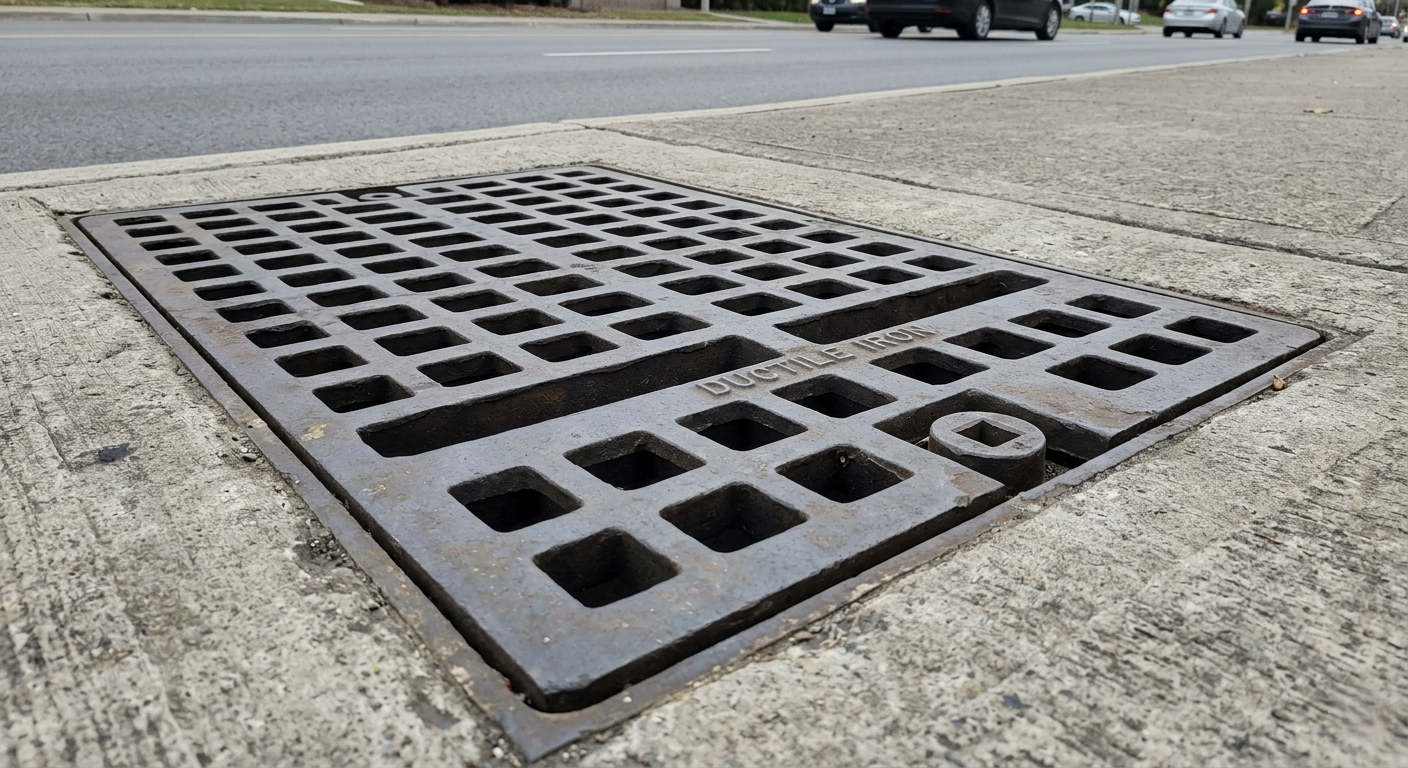
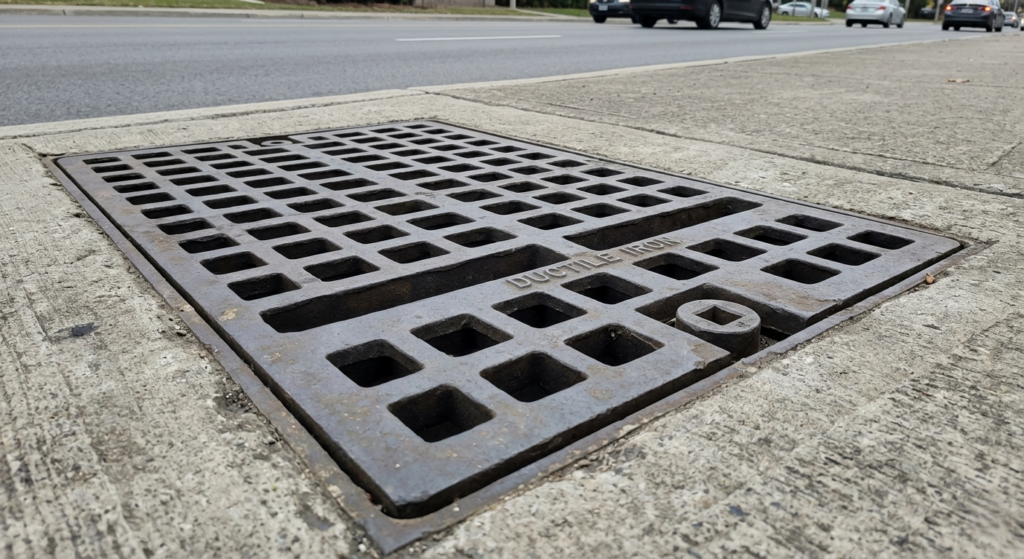
Modern municipal grids and highway systems face unprecedented wheel load stress and environmental corrosion. While traditional gray cast iron has been an industry standard for decades, civil engineers and urban planners are heavily transitioning to Ductile Iron (DI) drainage castings. Sourcing these components from an ISO-certified production facility ensures both durability and total public safety across global transit corridors.
Why Ductile Iron Outperforms Traditional Gray Cast Iron
The core performance difference between traditional Gray Iron (CI) and Ductile Iron (DI) lies entirely within their microscopic structural matrices. Gray iron contains sharp graphite flakes. This provides excellent vibration damping but leaves the material relatively brittle under sudden, intense impacts.
Ductile iron is engineered by injecting magnesium during the melting phase in electric induction furnaces. This forces the graphite to form spherical nodules, giving the iron structural tensile strength and high flexibility (ductility).
-
Gray Cast Iron (CI): Contains sharp graphite flakes, offering low to moderate tensile strength and brittleness under severe weight overloads.
-
Ductile Iron (DI): Contains spherical graphite nodules, providing high tensile strength, excellent shock absorption, and up to a 50% lighter profile for the exact same strength class.
International Load Standards for Drainage Infrastructure
Procurement teams auditing global OEM foundry supply chains must cross-examine casting capabilities against international EN 124 or ASTM load classifications. Heavy-duty castings deployed across arterial city avenues, highway shoulders, and freight ports require precise engineering certifications:
-
Class C250 (25 Tonnes): Deployed along urban gully channels, residential curb lines, and low-speed parking facilities.
-
Class D400 (40 Tonnes): The global benchmark for arterial roads, national highways, and all types of commercial vehicular traffic lanes.
-
Class E600 to F900 (60–90 Tonnes): Specialized heavy-loading environments including airport runways, industrial cargo docks, and heavy logistics yards.
Quality Assurance Check: Reliable infrastructure components depend on rigid physical verification. T.U. Iron Foundry Pvt. Ltd. executes strict on-site spectro-chemical analysis, microstructural nodularity tests, and multi-point load cell testing within our 1,500 MT annual capacity facility in Howrah, West Bengal, assuring complete compliance for municipal distributions across Europe, the USA, the Middle East, and all Indian states.
De-risking Municipal Projects with Anti-Theft Features
Beyond material strength, modern urban systems require operational safety designs. Advanced ductile iron castings include integrated hinge mechanisms, gas-strut assisted openings, and multi-point locking mechanisms.
These built-in safety designs prevent unauthorized entry, completely eliminate roadside theft due to zero scrap value conversion if permanently locked, and ensure the framing stays quiet and stable when heavy commercial vehicles pass over.